
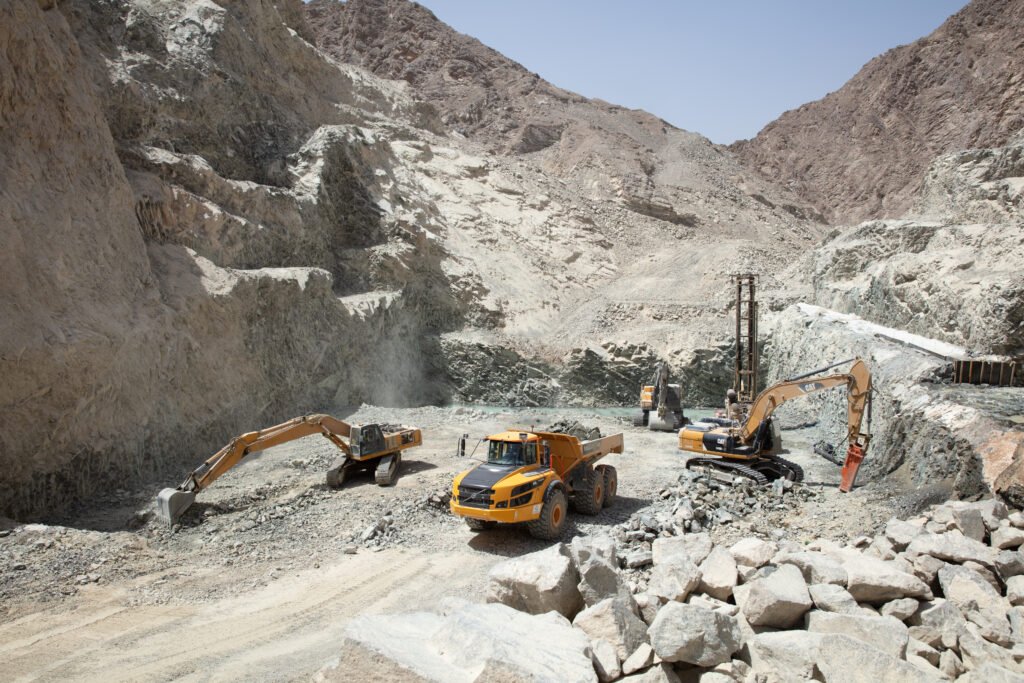
Earthworks in Construction involve excavation, grading, soil stabilization, embankment construction, and land reclamation to create stable foundations for infrastructure. Proper planning, modern equipment, safety protocols, and environmental management are essential for project success. Eastern Minning Company delivers precision driven earthmoving and marine earthworks services backed by engineering expertise and advanced technology.
At Eastern Minning Company, we deliver large scale earthmoving and site development services backed by engineering precision, modern equipment, and proven field expertise. Our projects across coastal and infrastructure sectors demonstrate how strategic planning and execution create long term value.
This complete guide explains the methods, equipment, and planning strategies behind Earthworks in Construction, while highlighting best practices aligned with global standards.
What is Earthworks in Construction?
Earthworks in Construction refers to the process of moving, shaping, and stabilizing soil or rock to prepare a site for building or infrastructure development. It includes excavation, grading, embankment formation, trenching, land reclamation, and compaction.
The objective is simple. Create a stable base that can safely support structures, roads, utilities, or marine infrastructure.
According to the American Society of Civil Engineers, proper site preparation significantly reduces long term structural risk and maintenance costs.
Without accurate ground preparation and soil stabilization, even well designed structures can fail.
Why Earthworks in Construction Matter for Infrastructure Projects
Every infrastructure project begins with land transformation. Whether it is a coastal port or a logistics hub, proper site grading and excavation determine project performance.
Key benefits include:
- Improved structural stability
- Controlled drainage and flood prevention
- Optimized foundation support
- Reduced long term repair costs
- Compliance with safety and environmental regulations
In coastal regions, marine earthworks also support erosion control and shoreline reinforcement.
The World Bank emphasizes that proper infrastructure groundwork directly impacts sustainability and lifecycle cost efficiency.
Core Methods Used in Earthworks in Construction
1. Excavation and Cutting
Excavation involves removing soil or rock to achieve required depth or level. This method is used for foundations, basements, trenches, and marine dredging zones.
Types of excavation include:
- Bulk excavation
- Trench excavation
- Rock cutting
- Channel excavation
Precision during this stage prevents uneven settlement.
2. Grading and Leveling
Site grading and land leveling ensure that the surface matches the engineering design.
Proper grading helps:
- Improve water drainage
- Prevent soil erosion
- Support pavement and structural loads
Laser guided grading systems now enhance accuracy and reduce rework.
3. Embankment Construction
Embankment construction involves building raised structures using compacted soil. It is common in highways, railways, and coastal defense systems.
Compaction strength determines performance. Weak compaction leads to cracks and failure.
4. Soil Stabilization
Soil stabilization techniques improve weak or loose soil using mechanical or chemical methods.
Methods include:
- Lime stabilization
- Cement stabilization
- Geotextile reinforcement
- Mechanical compaction
According to the Federal Highway Administration, stabilized soil increases load bearing capacity and extends pavement life.
5. Land Reclamation and Marine Earthworks
In coastal infrastructure, land reclamation and dredging create usable land from water bodies.
This process requires:
- Sediment management
- Coastal protection planning
- Environmental compliance
Eastern Minning Company specializes in complex marine and coastal earthworks projects across challenging terrains.
Equipment Used in Earthworks in Construction
Modern heavy construction equipment improves efficiency and safety. Equipment selection depends on terrain, soil type, and project scale.
Excavators
Used for digging, trenching, and material handling. Hydraulic excavators allow precise rock cutting.
Bulldozers
Ideal for pushing soil, leveling land, and clearing debris.
Motor Graders
Ensure accurate surface finishing and slope creation.
Compactors and Rollers
Essential for soil densification and load bearing improvement.
Dump Trucks
Transport excavated materials efficiently.
At Eastern Minning Company, we use advanced earthmoving machinery with GPS and automation support to minimize error and optimize output.
Planning and Project Management in Earthworks in Construction
Successful construction site preparation depends on structured planning.
1. Site Investigation
Before starting, geotechnical surveys analyze:
- Soil composition
- Bearing capacity
- Water table level
- Environmental impact
Accurate data prevents costly redesign.
2. Risk Assessment
Risk analysis covers:
- Soil instability
- Flood hazards
- Equipment failure
- Environmental compliance
Mitigation strategies reduce delays.
3. Cost Estimation and Budget Control
Detailed material calculation and equipment allocation improve financial control.
Transparent budgeting enhances stakeholder confidence.
4. Environmental Management
Sustainable earthworks and excavation projects require:
- Dust control
- Erosion prevention
- Proper waste disposal
- Water management
Compliance builds community trust and regulatory approval.
Safety in Earthworks in Construction
Safety remains a priority in all large scale earthmoving operations.
Key measures include:
- Protective equipment usage
- Equipment maintenance checks
- Operator certification
- Safe slope angles
- Emergency response planning
Eastern Minning Company follows international safety benchmarks to ensure zero harm operations.
Challenges in Modern Earthworks in Construction
Even with planning, challenges arise:
- Unpredictable soil conditions
- Weather disruptions
- Equipment downtime
- Regulatory approvals
- Environmental restrictions
Strong leadership, engineering expertise, and contingency planning help overcome these obstacles.
Technology and Innovation in Earthworks
Technology is transforming infrastructure earthworks planning.
Modern tools include:
- GPS based machine control
- Drone site mapping
- 3D terrain modeling
- AI driven soil analysis
These innovations improve precision, reduce waste, and increase productivity.
Eastern Minning Company integrates digital monitoring systems to ensure efficient project execution.
Why Choose Eastern Minning Company for Earthworks Projects
Our experience in marine works, excavation services, and large scale infrastructure development makes us a trusted partner.
What sets us apart:
- Decades of field expertise
- Integrated logistics support
- Skilled engineering teams
- Modern fleet of heavy equipment
- Commitment to safety and sustainability
We deliver end to end Earthworks in Construction solutions that meet international standards.
Future Trends in Earthworks and Infrastructure Development
The future of Earthworks in Construction is shaped by sustainability and automation.
Emerging trends include:
- Low emission construction equipment
- Smart compaction systems
- Eco friendly soil treatment
- Data driven project management
Companies investing in innovation will lead the next phase of infrastructure growth.
Frequently Asked Questions
1. What are the main stages of Earthworks in Construction?
The main stages include site investigation, excavation, grading, compaction, soil stabilization, and quality inspection. Each stage ensures structural stability and safety.
2. How is soil stability tested before construction?
Engineers conduct geotechnical testing such as soil sampling, load bearing tests, and moisture analysis to determine suitability.
3. What equipment is commonly used in earthmoving projects?
Excavators, bulldozers, graders, rollers, and dump trucks are commonly used for efficient material handling and compaction.
4. Why is compaction important in earthworks?
Compaction increases soil density and prevents settlement, cracks, and structural damage.
5. How long does a typical earthworks project take?
Project duration depends on land size, soil conditions, equipment availability, and weather. Large infrastructure projects may take several months.
If you are planning a large scale infrastructure or marine project, partner with Eastern Minning Company for reliable and efficient Earthworks in Construction solutions.
Contact our engineering team today to discuss your project requirements and receive a customized execution plan built for safety, precision, and long term performance.